


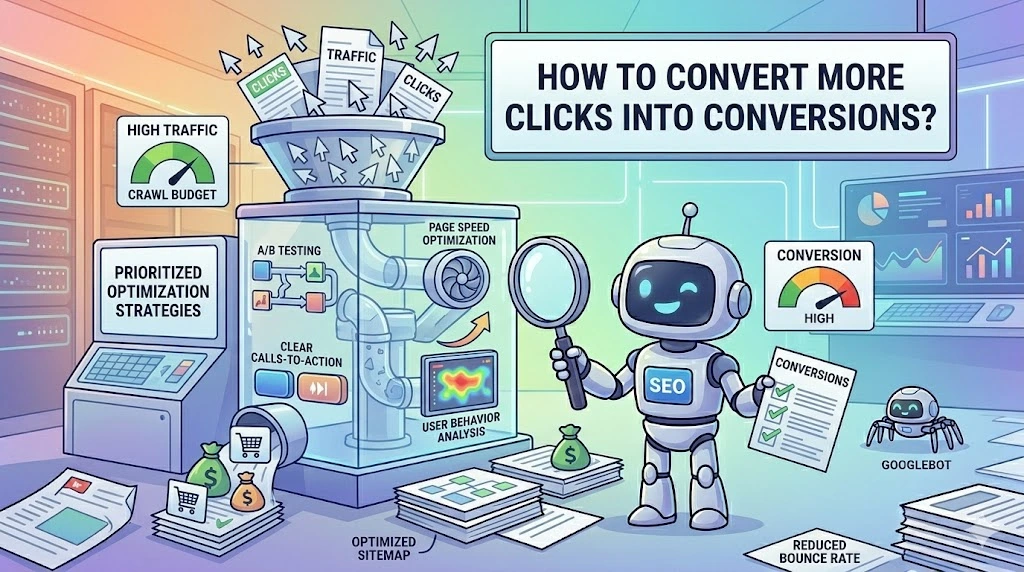
Your website ranks on page 1 for target keywords, but conversion rates remain flat. The problem isn’t visibility, it’s what happens after users click.
At this point, SXO comes in!
Search Experience Optimization (SXO) combines SEO visibility with user experience optimization, recognizing that ranking for keywords means nothing if visitors immediately bounce, frustrated by confusing layouts, missing CTAs, or slow-loading content.
Here’s a fact
In 2024, nearly 60% of Google searches ended without clicks. When AI Overviews appear, organic CTR drops further—from 1.62% to 0.61%.
These aren’t problems that you fix through traditional SEO. There are signals that remaining clicks must convert at higher rates because overall click volume continues declining. SXO is how businesses adapt, maximizing value from fewer but increasingly qualified clicks landing on their sites.
What Is Search Experience Optimization?
SXO stands for Search Experience Optimization. SXO bridges the gap between earning clicks (SEO) and converting visitors (UX). Rankings matter only if pages deliver value once users arrive. SXO combines search visibility with user behavior analysis, creating experiences where visitors scroll deeper, click CTAs, and complete desired actions rather than bouncing immediately.
The philosophy is straightforward: you still earn the click through SEO, but you also earn the scroll through clear design, and only then earn the conversion through reduced friction. Rank position 1 for the target keyword, but land users on a cluttered page with a buried CTA? Expect high bounce rates and wasted traffic. Rank position 3, but deliver clear messaging with a prominent CTA above the fold? Expect conversions exceeding the position-1 competitor with poor on-page experience.
SXO acknowledges the reality of modern search: clicks are becoming scarce, so every click must count.
Why Traditional SEO Metrics No Longer Suffice
Clicks alone don’t reflect website performance anymore. Declining search traffic from algorithm updates, zero-click searches stealing potential visits, and AI Overviews preventing clicks entirely mean businesses chasing higher rankings face diminishing returns without improving on-site experience.
Pakistani businesses are particularly vulnerable to this shift because 89% of traffic arrives on mobile, and mobile users are unforgiving, including slow pages, unclear navigation, and missing CTAs, which cause immediate bounces. A one-second delay reduces conversions 7%. Confusing layout sends users to competitors. Unclickable phone numbers waste conversion opportunities.
Traditional metrics (rankings, impressions, clicks) tell you a visibility story but not a conversion story. SXO metrics reveal what actually matters: does traffic convert? Do users find what they need? Are there friction points preventing action?
Key SXO Metrics to Track
Above-the-Fold Content Quality
First impressions matter. Users form a website opinion in 50 milliseconds. If above-fold content is cluttered, vague, or doesn’t answer “Is this what I searched for?” users bounce immediately.
Optimize above-fold for: clear headline matching search intent, visible CTA showing next step, trust signals (reviews, ratings, awards, credentials), and immediate value proposition. Remove unnecessary hero images that consume prime space without delivering the information users need.
Scroll Depth and Engagement Cliff
Watch where users stop scrolling. Significant drop-off (the “cliff”) usually indicates a friction point, such as content too dense, formatting hard to scan, a page taking too long to deliver value, or missing next step guidance. Improve scroll depth not by adding more content but by reorganizing existing content, moving valuable information higher, breaking dense paragraphs into scannable sections, place CTAs where scroll stalls naturally.
Dead Clicks and Rage Clicks
Dead clicks happen when users click non-clickable elements (misleading design). Rage clicks are rapid, repeated clicks indicating broken functionality or unmet expectations. Both reveal honest user frustration.
Examples: Phone number appears clickable but isn’t (fix: make it tel: link). Button looks interactive, but doesn’t work (fix: debug functionality). Form field appears responsive but lags (fix: optimize loading). These friction points represent hidden conversion opportunities. Fix them, and conversions increase 50-150%.
Session Recordings and Behavior Patterns
Heatmaps show patterns (where users click, how far they scroll). Session recordings show context (why users clicked, what they searched for, what confused them). Together, they reveal friction invisible in aggregate metrics.
Watch for hesitation (cursor pausing), erratic movement (searching for something), repeated scrolling (lost), or sudden navigation jumps (giving up). These behaviors predict bounces or abandonment.
Simplified SXO Testing Workflow
Step 1: Observe Behavior
Use tools (Microsoft Clarity free tier, Hotjar, or Google Analytics 4 events) to track user behavior on key pages. Review heatmaps, scroll maps, and session recordings. Document patterns: where do users pause? Where do they click? Where do they bounce?
Step 2: Identify Friction and Hypothesize
Ask “Why are users bouncing?” or “Why aren’t they clicking this CTA?” Create a testable hypothesis connecting friction to solution:
- “Users aren’t scrolling because the intro is too long. Moving CTA above fold will increase clicks.”
- “Users clicking on an unclickable phone number. Making it clickable will increase calls.”
- “Users bouncing from the accordion. Removing the accordion will reduce quick backs.”
Step 3: Test and Measure
Implement one change at a time. Use a mix of tools, including behavior tracking (Clarity), conversion tracking (GA4 events), and search performance (Google Search Console). Measure impact on: scroll depth, CTA clicks, form submissions, phone calls, time-on-page, bounce rate.
Real SXO Results
Removing hero images that consumed above-fold space: Pages per session increased 81%, time on page increased 158%, and scroll depth increased 19%.
Making phone numbers clickable: Dead click friction eliminated, phone call conversions increased 137.5%.
Removing accordions (collapsed content blocks) on mobile: Quick backs reduced from 15.8% to 13.2%, scroll depth improved 14.7%, and CTA clicks increased 66.7%.
Moving CTAs above fold: Homepage “Programs” CTA visibility improved 134% when positioned above fold with a clear path forward.
Securing Stakeholder Buy-In
Frame SXO as testing, not redesign. Present behavior data showing friction, propose a measurable fix, and track business-relevant outcomes. “We notice visitors aren’t scrolling past the header. Testing hero image removal to improve engagement” lands better than “Design update for aesthetic reasons.”
Tie improvements to business metrics: more scrolls = more content consumption = stronger authority signals. More CTA clicks = more conversions. More form submissions = more leads. This language resonates with stakeholders focused on ROI.
Conclusion
Ranking for keywords matters less when declining click volume requires higher conversion efficiency. SXO adapts to modern search reality by maximizing value from fewer, increasingly qualified clicks through friction reduction and experience optimization.
Start small: audit top-traffic pages with heatmap and session recording tools, identify friction points, test focused improvements, and measure impact. Over time, systematic SXO improvements compound. Scroll depth improves 20%, bounce rate drops 15%, and conversion rate increases 25%, transforming mediocre rankings into profitable traffic sources.
Ready to optimize your site’s experience, converting more clicks into customers? Our technical SEO services and conversion optimization work together. We identify technical barriers preventing optimal experience whilst implementing SXO improvements, ensuring every visitor has the best possible chance of converting. Partner with our SEO company in Pakistan to audit friction points and test improvements systematically.