


Your domain name is your first SEO decision, and it’s one most businesses get wrong. They choose domains stuffed with keywords, forget they need to be memorable, or pick trendy extensions that confuse users. Meanwhile, strategic domain selection quietly influences click-through rates, brand trust, user engagement, and ultimately your ability to rank competitively.
Domain names don’t directly determine rankings, but they create conditions where rankings become easier to achieve.
What Actually Is a Domain Name?
A domain name is your website’s address. The convenient alias points people to your specific spot on the internet. Rather than remembering IP addresses (123.45.67.89), users type readable names like cloudexmarketing.com. The domain name consists of two parts: the second-level domain (“cloudexmarketing”) and the top-level domain or TLD (“.com”).
Understanding domain structure matters because different choices have different SEO implications. The old “www” prefix (www.cloudexmarketing.com) was necessary decades ago but is now obsolete. Modern browsers assume “www” exists, making it unnecessary and simply lengthening your URL.
Types of TLDs and Their SEO Impact
Top-Level Domains (TLDs) fall into two categories: generic and country-specific.
Generic TLDs (.com, .net, .org, .biz, .io) work globally. .com dominates user trust. When people see “.com,” they immediately recognize it as a legitimate website. Newer extensions (.guru, .pro, .pizza, .blog) can work for specific brands but require explicit marketing explaining they’re websites. Users sometimes miss that they’re looking at a domain rather than just text.
Country-code TLDs (.pk for Pakistan, .uk for the UK, .de for Germany) signal geographic targeting to search engines and users. If your business operates exclusively in one country, ccTLDs provide explicit localization signals. However, if you serve international audiences, generic TLDs (especially .com) work better. They don’t artificially restrict your geographic reach.
For most businesses, .com remains the best choice. If your .com isn’t available, securing your brand across multiple TLDs (registering .net, .org, .io alongside your main domain) prevents competitors from claiming variations. But actively using multiple domains for one website dilutes backlink authority and confuses Google. Register them defensively, redirect them to your main domain.
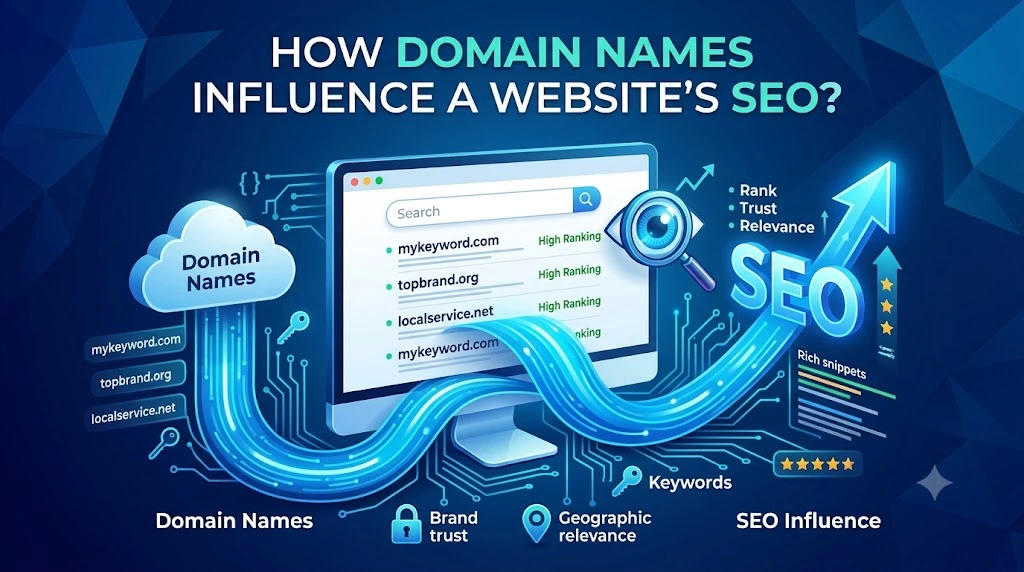
How Domain Names Actually Influence SEO
Click-Through Rate (CTR)
This is the hidden leverage domain names have. A short, memorable, brandable domain gets more clicks in search results than a domain packed with keywords or difficult to type. Google treats CTR as a ranking signal. Pages clicked more frequently rank higher over time. Your domain directly influences whether users click your result.
Compare bestdogtraining.info (keyword-stuffed, awkward TLD) versus pawsmaster.com (memorable, trusted TLD). Both could rank for “dog training,” but the second domain likely gets higher CTR, which compounds into better rankings.
Branding Beats Keyword Matching
Before 2012, Exact Match Domains, domain names perfectly matching search queries, received ranking bonuses. A domain called “bestcoffeemachines.com” ranking for “best coffee machines” got algorithmic advantages just from the domain-keyword match.
Google’s 2012 Exact Match Domain (EMD) Update neutralized this. Now, keyword-stuffed domains don’t rank better. Instead, Google favors brands. LEGO, Amazon, Google, and Nike. These aren’t keyword-optimized domains. They’re memorable brands that built authority through quality content, backlinks, and user engagement. That’s what actually ranks.
The lesson: Invest in a brandable domain you can build on long-term rather than a keyword-specific domain that telegraphs what you do but provides zero brand differentiation.
Domain Age Isn’t Magic
Older domains have natural advantages. Established backlink profiles, indexed pages, and historical authority. But domain age alone doesn’t rank sites. A domain registered 20 years ago, hosting low-quality content, won’t outrank a 6-month-old domain with excellent content and proper technical SEO.
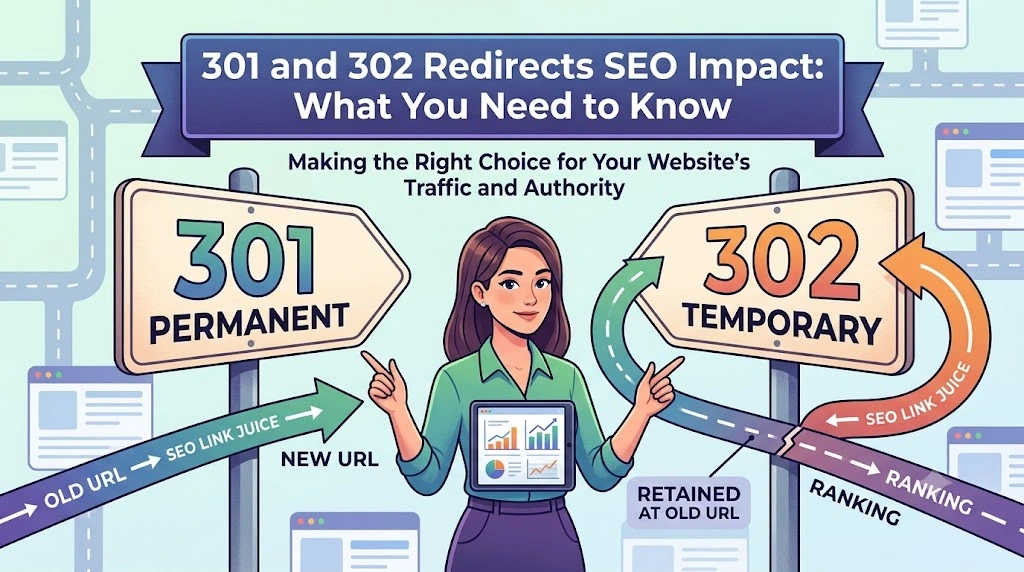
However, older domains with clean histories (no penalties, consistent quality) have accumulated legitimate authority advantages that shouldn’t be discarded lightly. If you own an established domain, 301 redirecting to a new domain costs SEO. The authority transfer is imperfect. This is why domain migration requires careful planning.
Best Practices for Domain Selection
Keep it short. Six to fourteen characters prevent URLs from being cut off in search results and make domains memorable. “hubspot.com” beats “theleadingmarketingautomationsoftwarecompany.com.”
Avoid hyphens and numbers. They make domains harder to type, remember, and speak verbally. “Best-Dog-Training-101.com” loses traffic from people typing “bestdogtraining.com” instead.
Choose trusted TLDs. .com commands instant credibility. Regional ccTLDs work for geographically-targeted businesses. Avoid trendy extensions unless your brand specifically requires them.
Verify domain history before purchasing. Old domains sometimes have penalties or spam history. Use tools to check whether domains were previously penalized by Google. A domain with a bad history requires extensive cleanup before ranking properly.
Plan migrations carefully. If launching a new brand or restructuring, establish 301 redirects from the old domain to the new domain immediately. Keep redirects active for a minimum of one year (Google says two years is safer). Update internal links first to avoid unnecessary redirect hops.
Changing Domains: The Real Cost
If you’re considering rebranding or migrating to a new domain, understand the SEO cost. Even with perfect 301 redirects, you typically lose 5-15% of organic traffic during migration. Rankings drop temporarily. Authority transfer isn’t 100% efficient. This is why domain selection requires strategic thinking from the start.
Pakistani businesses particularly benefit from .pk domains locally but .com globally. Cloudex Marketing helps businesses evaluate whether domain migration makes sense for their growth strategy.
Your domain name is your longest-term digital asset. Choose it strategically, build your brand around it relentlessly, and resist the urge to migrate unless necessary. If you’re considering a domain change or launching new ventures, our professional SEO services help evaluate migration impact and create safe transition strategies, minimizing ranking loss.