


A viral LinkedIn post claimed you could replace paid SEO tools with ChatGPT prompts and save $8,400 annually. The post exploded with 500+ likes and hundreds of comments.
But actual SEOs knew better
ChatGPT can’t do SEO; it can only talk about it.
This persistent misconception damages businesses, making SEO decisions based on false assumptions. ChatGPT can generate keyword lists with plausible-sounding search volumes and difficulty scores. It can sound like an expert using correct terminology and creating convincing tables. But every number is fictional. ChatGPT has zero visibility into Google’s index, real keyword metrics, or search trends because it doesn’t have access to live SEO data.
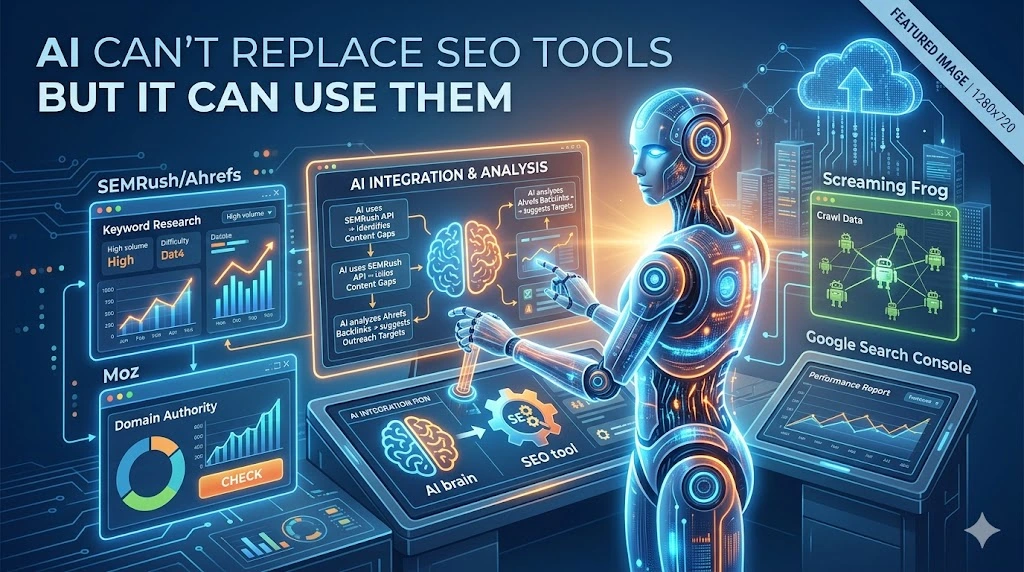
The real innovation isn’t replacing SEO tools with AI. It’s connecting AI to SEO data, so ChatGPT becomes genuinely useful for SEO work instead of impressive-sounding but worthless guessing.
The Fundamental Problem: LLMs Can’t See SEO Data
Large language models like ChatGPT work by predicting text based on patterns learned during training. They’re sophisticated text prediction engines trained on massive datasets of written language. Nothing more.
ChatGPT isn’t connected to Google’s index. It doesn’t pull real-time data from keyword databases. It has no visibility into how search volumes fluctuate monthly, how rankings shift over time, or how backlink profiles change. There’s a hard stop when training data ends. GPT-4’s cutoff was April 2024, meaning it does not know events, trends, or data created after that date.
When ChatGPT tells you “this keyword has 1,200 monthly searches,” it’s not retrieving actual metrics. It’s guessing based on patterns in training data. When it assigns difficulty scores like “43,” those numbers sound authoritative but are completely fabricated. The model has no real understanding of competition or ranking difficulty because it can’t access Google’s ranking algorithm or actual SERP data.
As SEO strategist Matti Ljungberg brilliantly put it: “Of course, it can estimate monthly search volume. Just like I can estimate that 47 million penguins are living in your fridge. Pure guesswork, but it sounds convincing!“
This is the critical distinction most businesses miss. ChatGPT sounds like an SEO expert. It uses correct terminology. It produces professional-looking tables and structured data. But behind the convincing presentation is zero actual data. Just a very confident hallucination.
How Real SEO Tools Actually Work
Legitimate SEO platforms collect, process, and store massive amounts of real search data continuously updated.
Ahrefs operates the second most active web crawler globally, constantly crawling and re-crawling trillions of pages, tracking how backlinks, content, and rankings change over time. It maintains a database of 28+ billion keywords from actual search data. These aren’t estimates. They’re real metrics derived from analyzing actual search behavior and ranking patterns.
This allows SEO platforms to calculate meaningful metrics: Domain Authority scores reflecting actual backlink patterns, real search volume data from actual Google searches, keyword difficulty based on genuine competitive analysis, organic traffic estimates from actual ranking and click data, and search trend analysis showing actual volume fluctuations.
Pakistani businesses using SEO tools access data reflecting what’s actually happening in Google search. Businesses using ChatGPT instead are making optimization decisions based on fictional numbers. The difference compounds, including wrong keyword targeting, wasted content creation, missed opportunities, and squandered budgets.
Why This Matters for SEO Strategy
A competitive SEO landscape means every decision counts. Competing against international businesses already using sophisticated tools, companies can’t afford optimization based on guesswork.
Targeting keywords ChatGPT suggests have “low competition” but actually have 50+ competing domains in the top 10 wastes months creating content that never ranks. Trusting difficulty scores that don’t reflect actual Pakistani competitive dynamics leads to pursuing impossible keywords, ignoring genuinely accessible opportunities.
Businesses need SEO data grounded in reality, search volume reflecting searches specifically, keyword difficulty reflecting actual SERP competition, backlink analysis showing which linking domains actually matter in the Pakistani context, and trend data showing what it’s actually searching for.
ChatGPT provides none of this. It provides confident-sounding approximations that feel useful until you realize they’re completely disconnected from actual SEO reality.
The Solution: Connecting AI to Real SEO Data
The innovation isn’t replacing SEO tools with AI. It’s connecting AI to SEO data, enabling ChatGPT and similar assistants to access real metrics.
This is exactly what the Model Context Protocol (MCP) accomplishes. MCP is a standard allowing AI assistants like ChatGPT or Claude to connect directly to SEO platforms like Ahrefs, accessing live API calls returning real keyword metrics, backlink data, and site performance information instead of guesses.
With MCP enabled, instead of prompting ChatGPT with:
“Give me 20 low-competition, high-intent keywords in [niche] with search volume and CPC data.”
And getting back completely fabricated numbers, you can prompt:
“Tell me about the rankings [Competitor] has on the first page of Google that [My Site] doesn’t have first-page rankings for.”
ChatGPT then calls real Ahrefs data, returning actual competitive gaps based on real ranking data. Instead of asking ChatGPT to hallucinate, you’re asking it to analyze real metrics and present insights conversationally.
This transforms AI from impressive-but-useless to genuinely helpful. ChatGPT still isn’t “doing SEO,” humans still make strategic decisions. But ChatGPT becomes a conversational interface to real SEO data, eliminating busywork switching between filters, dashboards, and exports.
Practical Implications for Pakistani Businesses
Connected AI changes SEO workflow fundamentally.
Instead of manually checking competitor rankings across multiple pages, asking ChatGPT connected to real data reveals content gaps between your site and competitors instantly.
Instead of laboriously building keyword lists from multiple sources, prompting ChatGPT connected to real data surfaces entire keyword clusters with actual search volumes and difficulty scores.
Instead of manually analyzing backlink profiles across competitors, ChatGPT connected to real data identifies link-earning content patterns you’re missing.
This isn’t replacing SEO tools. This is using AI as a conversational interface, making SEO tools dramatically more efficient.
The Critical Caveat: AI Still Isn’t an SEO Strategist
Even with access to real data, AI doesn’t replace human expertise, judgment, or strategy.
ChatGPT connected to real data provides insights faster. But someone with actual SEO knowledge still decides which opportunities matter, which keywords align with business goals, which content gaps are worth addressing, and which ranking improvements translate to actual business impact.
The MCP doesn’t replace your judgment or experience. It removes repetitive data-gathering work between insight and action. Instead of spending hours filtering, exporting, and analyzing, you spend minutes getting the same insights conversationally and spend actual time on strategy, content creation, and execution.
AI helps you scale. It doesn’t replace your thinking.
Why This Matters Now
The AI-SEO landscape is evolving rapidly. Claims that AI replaces SEO tools were never true, but they’re becoming increasingly irrelevant. The real competition isn’t between SEO tools and ChatGPT. It’s between teams using connected AI efficiently versus teams still doing work manually or worse, relying on AI hallucinations, believing fictional data.
Businesses choosing between “expensive SEO tools” and “free ChatGPT” are asking the wrong question. The question is whether decisions are based on real data or fiction. Teams connected to real data, via proper SEO tools or AI-connected tools, make better decisions. Teams using ChatGPT without real data are gambling with optimization budgets.
Start Using AI Properly for SEO
The future of SEO isn’t AI replacing tools. It’s AI making tools dramatically more efficient.
Stop believing ChatGPT keyword research. Stop trusting fabricated difficulty scores. Stop making optimization decisions based on hallucinations. Start connecting AI to real SEO data where available, or use proper SEO platforms if AI integration isn’t available.
For Pakistani businesses, this means either using dedicated SEO tools with real data or connecting AI assistants to platforms providing real metrics. Either approach beats the false economy of ChatGPT-only “research” costing months of wasted effort based on fictional numbers.
At Cloudex Marketing, our SEO services in Pakistan use real SEO data and tools, making fact-based optimization decisions, keyword research grounded in actual search volume and competition, technical audits based on real crawl data, and competitive analysis reflecting genuine ranking patterns. We don’t waste client budgets on AI-generated keyword lists or fictional difficulty scores.
Stop confusing AI capability with SEO reality. Real SEO decisions require real data. Everything else is expensive guesswork masquerading as strategy.