
Organic traffic is simply the visitors who land on your website naturally through search engines, without paid ads, boosted posts, or promotions. It’s the most reliable, sustainable, and cost-effective source of long-term visibility.
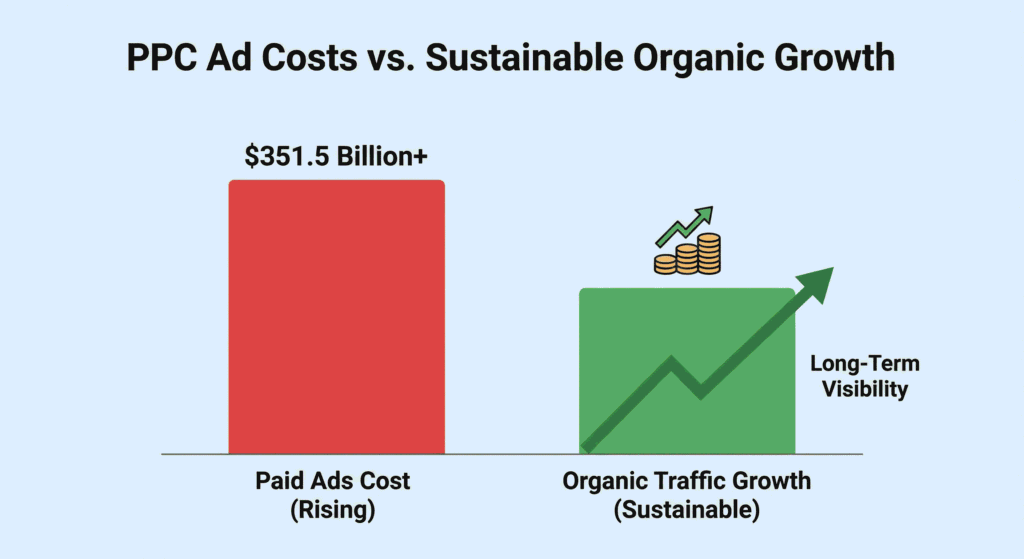
But as time moves forward, the digital world isn’t slowing down. Technology is evolving, user behaviour is shifting, and competition is rising. In 2025 alone, businesses worldwide spent an eye-opening $351.5 billion on PPC ads. A figure proving how crowded the paid-ad ecosystem has become.
Yet even with all this paid noise, most business owners still dream of the same thing:
- How to get their site noticed
- How to increase organic traffic
- And how to increase traffic to their site without PPC ads, which is draining their budget
Many feel stuck, especially if rankings drop unexpectedly or impressions go down. Others struggle because their site simply isn’t showing up where it should.
So this guide breaks it all down: why is your website not showing up, what actually works today, and how to increase traffic to your website without social media marketing or PPC ads.
And to make it easier, you’ll also get a simple, practical gift below:
- A free 2026 On-Page SEO Checklist
You can use this as your monthly or quarterly review, especially when adding new content or after site updates.
7 Best Ways to Increase Organic Traffic (Without PPC or Social Media)
Here are practical methods to increase traffic to your site without social media marketing or PPC ads, grounded in what works today.
1. Create High-Quality, Valuable Content
Good content remains the backbone of increasing your organic traffic through content marketing.
Good content is still the strongest way to increase your organic traffic through content marketing, and Google keeps confirming it. In 2024–2025, Google repeatedly stated that helpful, people-first content remains the primary ranking factor. It is also being reported that thin or unhelpful content pages were disproportionately impacted in recent core updates.
What this means:
Google now prioritises pages that demonstrate genuine expertise, solve a problem, and deliver depth. Not surface-level fluff.
So:
- Go deeper. In 2025, it is highlighted that longer, well-structured articles tend to perform better because they offer comprehensive answers and reduce pogo-sticking.
- Be genuinely useful. Google’s Helpful Content guidance still stresses writing for users, not algorithms.
- Write content people actually search for. Use long-tail phrases that match intent and specific questions.
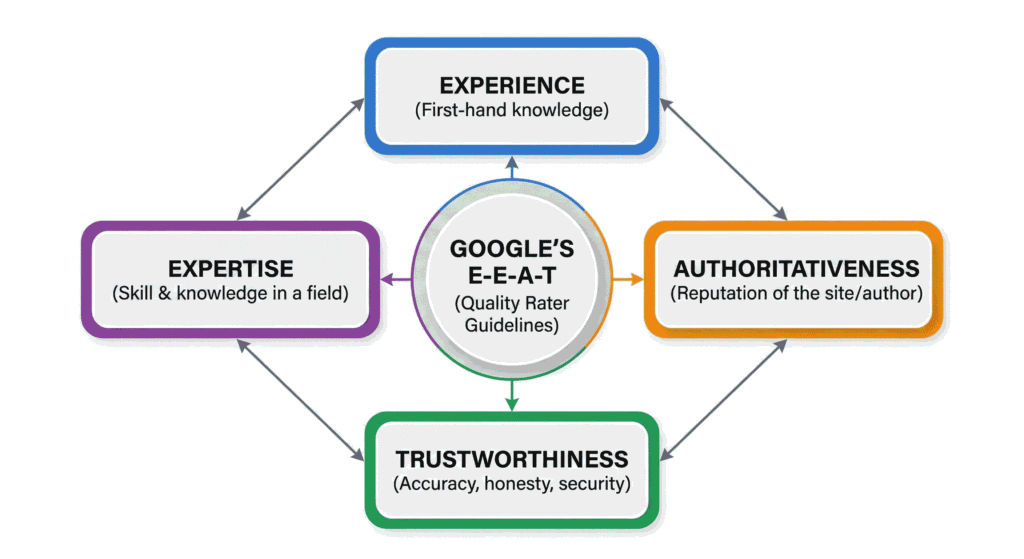
When your content fulfils Google E-E-A-T guidelines, genuinely helps, your organic visibility grows, naturally and predictably.
2. Solve Real Problems With Every Piece of Content
In 2025, Google confirmed that content that directly satisfies user intent has a higher chance of ranking and staying stable across updates. It is also reported that pages answering a query clearly and efficiently tend to win more clicks and longer engagement time, two strong behavioural signals.
This means your content should focus on:
- Answering questions your audience already has
- Addressing pain points with clear solutions
- Anticipating related needs so users don’t need to return to Google to refine their search
Real clarity increases trust. Trust increases engagement. Engagement increases rank.
3. Use relevant keywords naturally
Target long-tail phrases (less competitive, more specific) and match content to what people actually search.
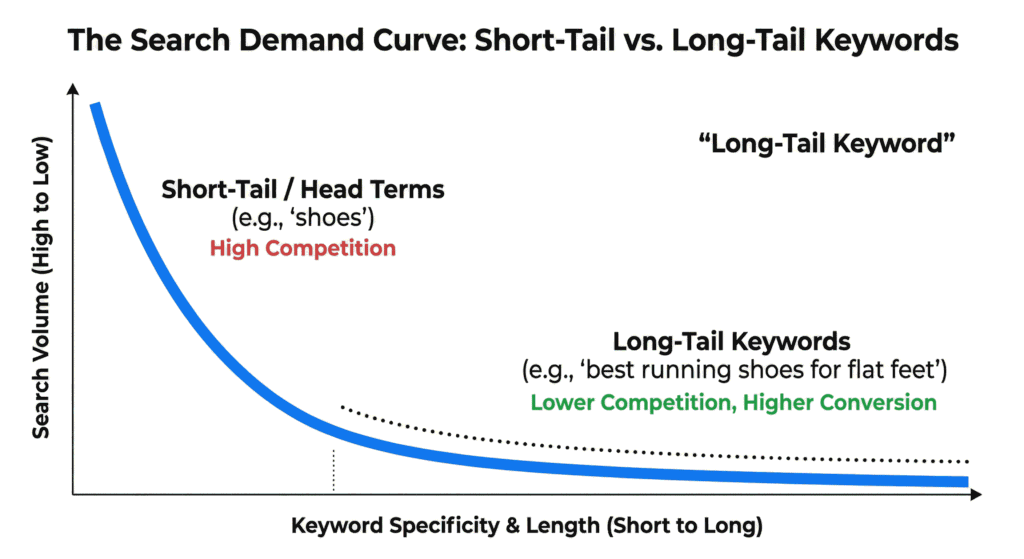
Use relevant keywords naturally and avoid forcing terms into sentences. Target long-tail variants because they’re more specific, less competitive, and better at matching real-world search behaviour.
This isn’t about stuffing keywords. It’s about building content that attracts and keeps real visitors.
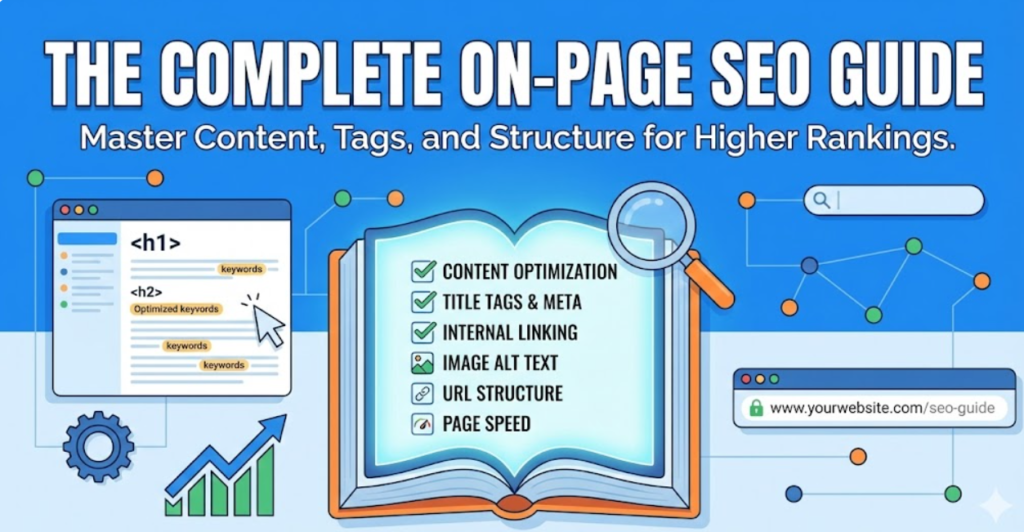
3. Optimise On-Page SEO (The Essentials That Actually Work)
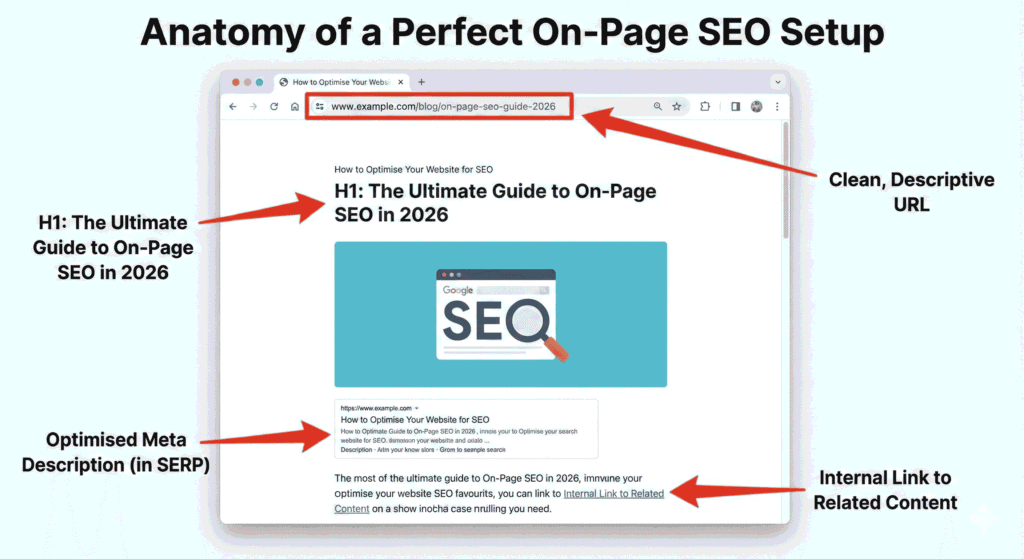
On-page SEO remains critical. Done well, it improves crawlability, readability, and relevance.
- Use descriptive, keyword-rich title tags and meta descriptions (but avoid clickbait).
- Structure content logically with headings (H1, H2, H3…) so search engines and readers understand your page’s flow. In our heading tags’ guide, you’ll find how a well-organised heading framework actually looks & works in practice
- Make URLs clean and readable rather than messy or parameter-heavy. Don’t miss our 6 best practices to create SEO-friendly URLs
- Ensure images have alt text (helps search engines “see” images and boosts accessibility). Find out how to utilize alt text the right way in our detailed guide on alt text.
- Keep page speed fast and user experience smooth. Google’s Core Web Vitals matter more than ever.
4. Build Trust: Backlinks and Quality Signals
High-quality backlinks from authoritative, relevant sites remain a major way to get your site noticed.
- Create linkable content: in-depth guides, useful resources, original insights.
- Avoid shady or spammy link tactics. Quality beats quantity.
- Guest-post on reputable sites or collaborate with relevant partners. It is a natural & effective solution if you’re wondering how to increase referral traffic.
5. Optimise for New Search Trends
Search is evolving rapidly. In 2026 and beyond, traditional SEO must adapt to new patterns: voice search, generative AI search engines, AI-overview results, and changing user behaviour.
- Use conversational, question-based headlines and subheadings (good for voice search and AI queries).
- Structure content to answer user questions directly. Short, clear paragraphs, bullet lists, FAQs.
- Keep content fresh. Update old pages with new info, relevant examples, and current data.
6. Internal Linking & Smart Site Structure
Pulling visitors deeper into your site helps boost engagement and signals relevance to search engines.
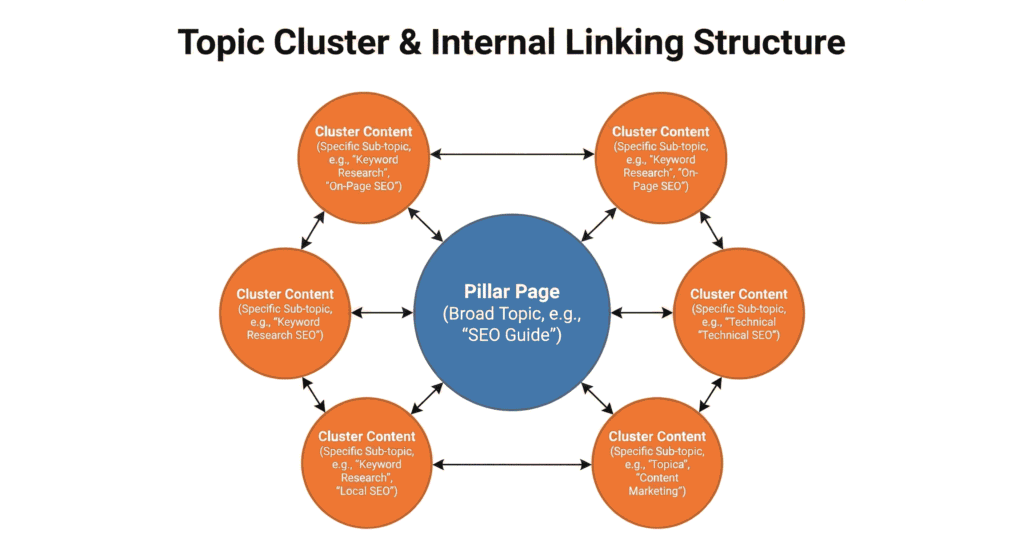
Use internal links logically to connect related content. For example, once you explained & guided the basic understandings of SEO, you should link relevant service pages like SEO Services naturally, where it adds value.
Also, make sure your site structure, from navigation to URL design, is clean, simple and intuitive.
7. Monitor, Measure & Adapt
SEO is not something you “Set and Forget”. Because search engines evolve (algorithm updates, AI integration, changing data patterns), what worked last year may not work now.
- Use analytics to spot pages with high impressions but low clicks; your titles or meta descriptions need optimisation.
- Periodically audit older content. Update stats, refine the messaging, and fix broken links.
- Combine content marketing with structural SEO: titles, URLs, tags, internal links, and site speed.
Why Organic Traffic Still Matters in 2026
Organic traffic remains the most stable and future-proof way to grow your website visibility, especially now, when search trends are shifting faster than ever.
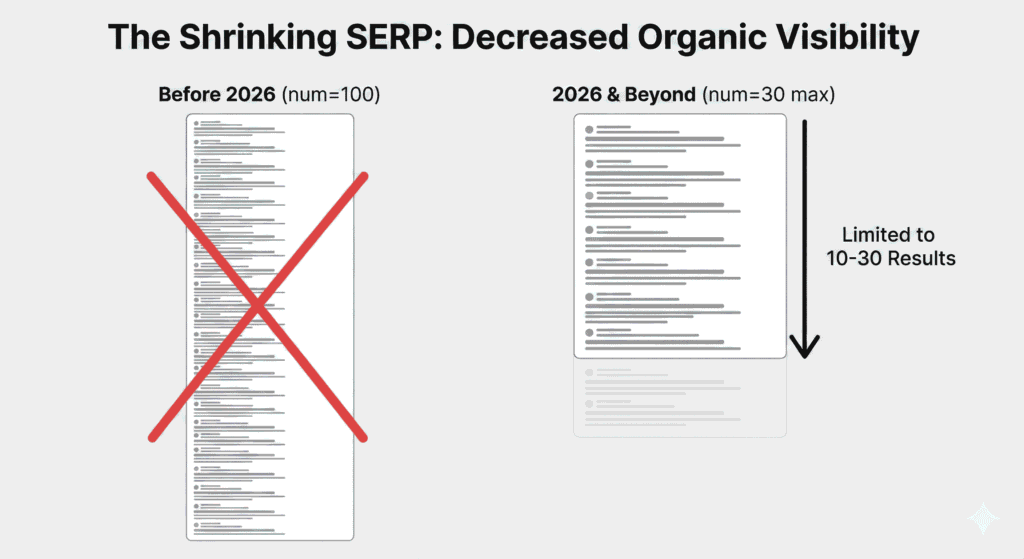
For example, Google’s num=100 parameter (which previously allowed users to see 100 results per page) has now stopped working and has been replaced by the num=30 parameter. In simple terms:
- Google no longer shows 100 organic results at once.
- Started showing a minimum of 10 to a maximum of 30 per page.
Moreover, with the rise of AI-powered search results, constant algorithm updates, and shifting SERP layouts, it’s no surprise that many websites’ visibility and click-through rates (CTR) are down by 30%. It is necessary to know what is click-through rate (CTR) is when you’re struggling to improve your website performance on search engines like Google.
So, the thing is: the old “publish once and hope for traffic” approach simply can’t survive in 2026.
If your goal is to increase visitors to your website and get your site noticed, without depending on paid ads or social platforms, then doubling down on organic search is the smartest move. It delivers long-term compounding returns, builds authority, and keeps your brand visible even when trends change.
And if you want expert hands guiding that growth, partnering with a natural SEO company like Cloudex Marketing can help you increase traffic to your website without social media marketing by applying proven, data-led strategies.
Explore our SEO Services to see how we can strengthen your organic performance and drive consistent search visibility.
Free On-Page SEO Checklist (2026 Edition)
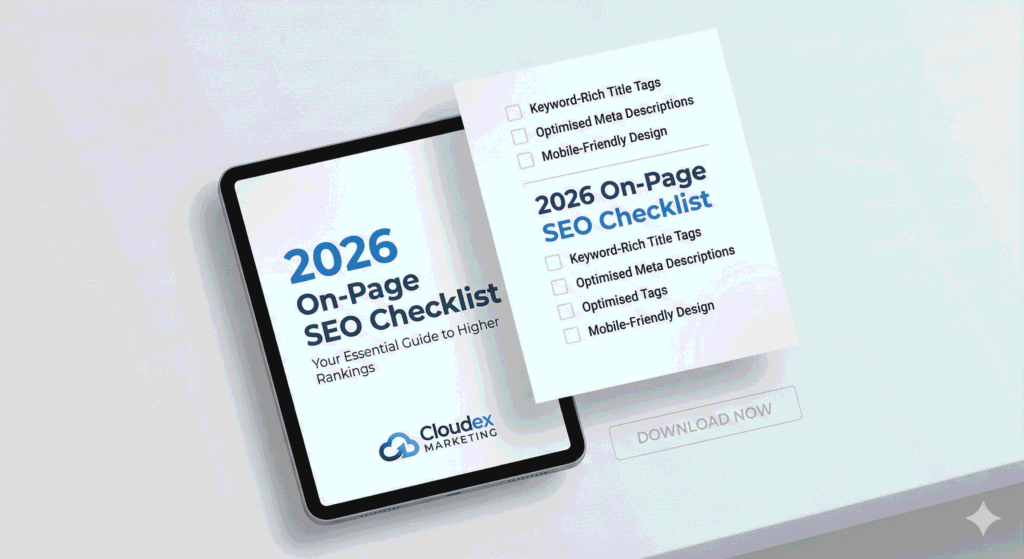
Here’s the little gift we promised you at the start:
- Your free On-Page SEO Checklist (2026 Edition).
It’s a clean, practical list covering the essentials you need to optimise any page quickly and confidently. Whether you’re fixing visibility issues, improving rankings, or simply tightening up your content workflow, this checklist keeps everything sharp, structured, and up-to-date with the latest Google standards.
Use it every time you publish, and you’ll never miss a core optimisation step again.
Download it Now!
Some Common Questions & Misconceptions
1. Can I increase traffic to my website without social media marketing?
Yes, absolutely! Google has repeatedly stated that what matters most is helpful, relevant, people-first content, not where you promote it.
By improving your on-page SEO, publishing content that answers real questions, fixing technical issues, and organising your site logically, you can grow traffic without relying on social media at all.
Search engines reward sites that are useful, fast, and easy to understand, and that alone can drive thousands of visitors over time.
2. What about referral traffic or backlinks? Do those matter less now?
No, they still matter, and Google has made this clear in recent discussions about ranking systems. While Google no longer describes links as a “top three ranking factor,” they remain a strong trust signal.
When reputable websites link to you, it tells Google your content is worth sharing. That boosts authority and brings referral visitors directly from those sites. Think of backlinks like recommendations; the more genuine ones you earn, the more your site is trusted.
3. If my site is new, will Google even notice it?
Yes, but it may take time, and that’s normal!
New websites often go through what SEOs call a “sandbox” period, where Google needs time to crawl the site, understand the content, and assess trustworthiness. It is a kind of probation period for your new website.
However, Google has never officially confirmed a sandbox, but they have explained that newer sites naturally take longer to build topical authority.
4. How do you come out of the Google Sandbox?
You get out of the “sandbox” by proving to Google that your site is trustworthy and worth ranking.
According to Search Logistics, the fastest way is to publish genuinely helpful content consistently, fix technical issues as soon as you spot them, and build a clean, natural backlink profile. Over time, Google sees that your site is reliable, active, and adding value, and that’s when your rankings start to climb.
Conclusion
The SEO game has shifted. Getting Organic Traffic in 2026 Means Doing SEO the Real Way. AI search, changing algorithms, mobile behaviour. They all demand more care, more clarity, and more user-first thinking.
But beneath all that change, one truth remains: websites that prioritise value, relevance, clarity and credibility win over time.
If you want to increase visitors to your website, without relying on ads or social media, start with real content, real optimisation, and a thoughtful SEO strategy.
Ready to build something that lasts?
Share your requirements, let our SEO Services handle the rest!