


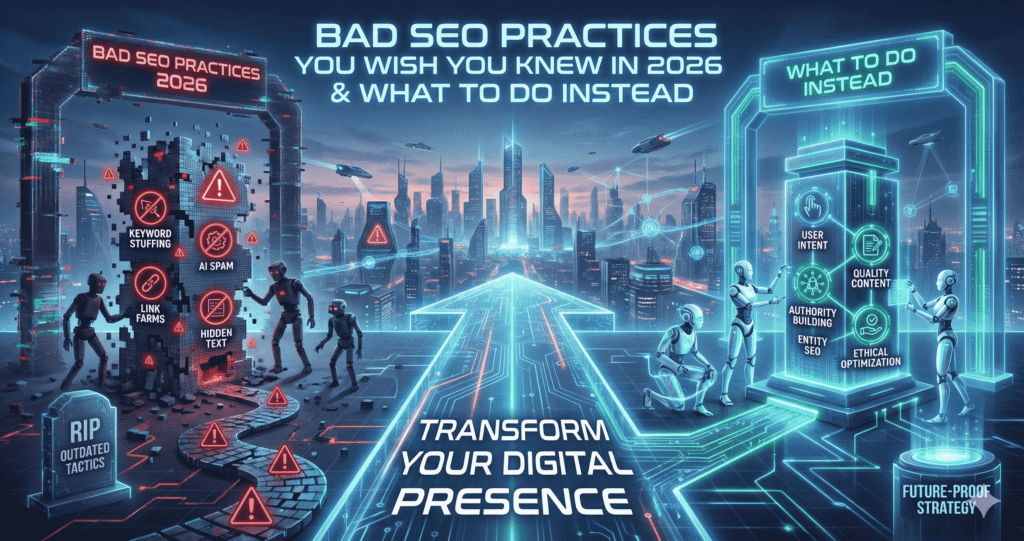
SEO isn’t just about keywords or backlinks. It’s about building trust with search engines and users. Yet, many sites still fall into traps that deliver short-term gains but long-term pain.
From outdated tactics to aggressive manipulation, bad SEO practices harm visibility, user experience, and credibility.
We’ve broken down the most harmful errors and shared practical alternatives. Avoid fluff, skip hype, and focus on what truly works.
1. Creating Unhelpful Content That Lacks Expertise
SEOs flagged low-value content as the biggest SEO mistake. Rewriting generic tips, fluff, or recycled information won’t rank you in Google or get cited by AI systems like ChatGPT or Gemini.
For example, writing “Drink water for fitness” without context, stats, or unique insight adds zero value.
What to do instead:
- Share real experience. Case studies, experiments, or interviews add authority.
- Include original data. Even simple surveys will make content stand out.
- Find gaps. Cover angles competitors miss, like niche use-cases.
High-quality, expert content signals trust. It naturally drives clicks, backlinks, and engagement.
2. Over-Optimising for Search
Over-optimisation is content written more for bots than humans. Excessive keywords, robotic phrasing, or repeated internal links make reading painful. SEOs all across the globe see this as a major problem.
What to do instead:
- Write for humans first. Provide clear steps, examples, and value.
- Use internal links thoughtfully. Only link when it helps the reader explore further. For example, while explaining “how to fix a slow website,” link to a guide on what is click-through rate to clarify user behaviour impact.
The goal is readability and authority, not tricking algorithms.
3. Using Private Blog Networks (PBNs)
PBNs promise quick authority by funneling links to your site. But they’re risky. Google penalties are real. 12% of SEOs flagged PBNs as a critical bad practice.
Safer alternative:
- Build genuine backlinks. Publish valuable content, digital PR, or research that others want to cite.
- Example: A cybersecurity firm releasing a study on recent breaches naturally earns links, rather than paying for hidden PBN links.
Long-term trust beats short-term spikes every time.
4. Delivering a Poor User Experience
Sites that load slowly, have intrusive pop-ups, or messy navigation drive users away. 15% of SEOs identify this as a key mistake.
What to do instead:
- Improve page speed. Compress images, minimise scripts.
- Simplify navigation. Menus should feel intuitive.
- Mobile-first design. 60%+ of traffic comes from mobile devices.
Good UX keeps users on-site longer, reduces bounce rates, and signals quality to Google.
5. Cloaking or Manipulating Search Engines
Cloaking is when a website shows one version of content to search engines and a different one to human visitors. It seems clever, but Google treats it as a serious violation. Even small attempts to hide or alter content for bots will trigger penalties and hurt your rankings.
Safer alternative:
- Serve the same content to users and search engines.
- Focus on structured, clear content that’s indexable and helpful.
Shortcuts like this backfire. Transparency and consistency are the only reliable paths to long-term SEO success.
6. Publishing Generic, AI-Generated Content
AI content is tempting, but generic, unverified material will tank rankings. AI should assist, not replace expertise.
What to do instead:
- Use AI to draft or brainstorm ideas, then human-edit with insight.
- Add facts, data, and examples. Make content actionable.
- Cloudex tip: Use AI responsibly for alt text, summaries, or meta descriptions, not full articles.
For example, understanding how AI fits into your overall optimisation strategy will make a difference. This is especially true if you’re balancing automation with human insight, as explained in our guide on AEO vs SEO: Everything You Need to Know.
Well-edited AI-assisted content will scale efficiency without compromising quality.
7. Duplicate Content
When you have two or more pages on your site showing the same (or very similar) content, search engines get confused about which one to rank. They pick one version and ignore all the others. As a result, you lose visibility for every duplicate page.
What also happens:
Ranking strength, like backlinks, internal links, and engagement metrics, gets split across duplicates rather than concentrated on a single “authority” page.
That dilution makes it much harder for any version to reach high positions.
Google and other crawlers also waste valuable “crawl budget” by visiting duplicate pages over and over, resources that could be spent discovering new or updated content instead.
Duplicate content doesn’t just mean wasted work. It actively undermines your SEO by scattering authority, confusing signals, and suppressing indexing and ranking potential.
Fix it this way:
- Consolidate duplicates into one strong page. Merge similar articles or combine product pages that overlap heavily.
- Pick a “master” URL and canonicalise it using rel=”canonical” — this tells search engines which version you prefer them to index.
- Use 301 redirects when removing or merging pages, which ensures any links pointing to old URLs pass value to the retained version.
- Ensure each page has unique content and purpose. Even small changes in angle, data, examples, or structure will help.
- Avoid auto-generated variants, parameter-based URLs, or duplicate templates when possible.
If you build your site with clarity. One unique idea per URL, no clones. You avoid confusion for both users and search engines. That’s real SEO hygiene that you can study in detail in our guide about SEO-friendly URLs.
8. Relying on Reputation Abuse
SEOs noted manipulating reviews, fake testimonials, or inflated ratings. These temporarily influence traffic but are easy to detect and penalise.
What to do instead:
- Collect genuine reviews. Encourage honest feedback.
- Highlight case studies or client results instead of fake numbers.
Authenticity wins trust, which drives both clicks and conversions.
Why Avoiding These Practices Matters
Bad SEO delivers short-term spikes but long-term damage:
- Lost visibility
- Fewer visitors
- Reputation harm
- And penalties
Meanwhile, competitors applying ethical strategies consistently grow authority, traffic, and conversions.
At Cloudex Marketing, we audit your websites for these bad practices and replace them with actionable, ethical strategies that improve rankings and ROI. No overloaded reports, just real results.
Takeaways for 2026
- Focus on expertise, value, and clarity.
- Write for humans first, algorithms second.
- Build links naturally. Avoid shortcuts like PBNs or cloaking.
- Enhance UX and mobile experience.
- Monitor duplicate content and reputation signals.
- Use AI responsibly. Assist, don’t replace.
Avoiding these mistakes isn’t optional. It’s how sites survive and grow in today’s competitive SEO landscape.
Ready to audit your SEO the right way? Cloudex Marketing will help you spot weak points, remove harmful tactics, and build sustainable authority. Contact us today for a free site assessment.