

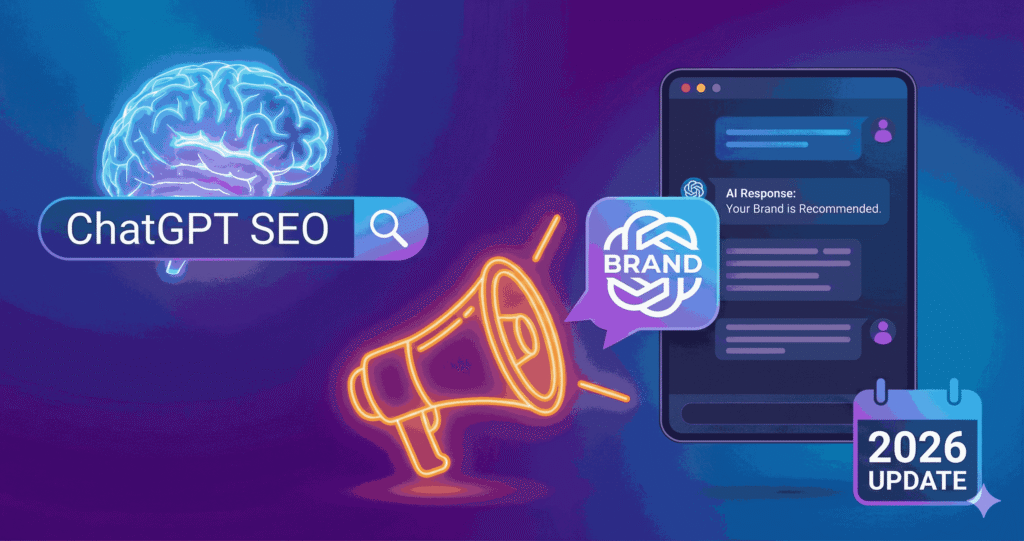
AI search isn’t the future. It’s here. ChatGPT, Claude, Perplexity, and Google’s Gemini now influence what users see and trust. Showing up in these tools can drive visibility, credibility, and traffic.
But not all brands get cited.
Many rely on old SEO habits, thinking keywords alone are enough.
In reality, AI SEO is about relevance, authority, and making sure your content is discoverable by both humans and machines.
Why Optimising for ChatGPT Matters
AI tools don’t “rank pages” the way search engines do. Instead, when users ask a question, like “how to change a car tyre.” ChatGPT (or its browsing mode) tries to fetch relevant, credible web content to build an answer.
That means your page needs to meet a different set of standards: clarity, authority, structure, and accessibility.
Even if you’re not ranking #1 on Google, being AI‑ready gives you another shot at visibility. That’s especially useful for niche content, long‑tail queries, or expert‑depth topics where traditional SEO competition is fierce.
Researches show a strong correlation between pages cited by ChatGPT and organic Google rankings. If your content is AI-ready, you can capture both audiences simultaneously.
Step 1: Make Sure Your Site is Indexed
AI tools like ChatGPT rely heavily on Bing and Google search indexes.
- Bing: Submit XML sitemaps via Bing Webmaster Tools. Check for crawling issues, blocked pages, and accidental noindex tags. Use IndexNow to notify Bing of new content.
- Google: Submit your sitemap via Google Search Console. Monitor why pages aren’t indexed and fix errors promptly.
Tip: Avoid relying on JavaScript for essential content. AI crawlers may not render it properly.
Step 2: Cover Specific Search Intents
ChatGPT users type full questions, not single keywords. Examples:
- “Best high-speed cat toys for households with multiple cats”
- “Top apps to remind me to feed my dog”
Your content should answer these granular queries. Details, context, and practical examples make your pages more likely to be cited.
Step 3: Create Authoritative, High-Quality Content
Generic AI content won’t cut it. Pages must be accurate, actionable, and valuable. Use AI for drafting ideas, meta descriptions, or alt text, but always refine with human expertise. Add data, examples, and local insights where relevant.
Here’s a tip for you:
Treat AI as a co-pilot, not the pilot. Over-reliance can hurt credibility and rankings. For a deeper dive into AI-enhanced SEO strategies, check out our AEO vs SEO guide.
Step 4: Internal Linking and Structured Data
AI and search engines favour well-structured websites. Internal links pass authority and guide crawlers. For example, grouping related pages into clear topic clusters shows both users and AI that your site has depth and expertise.
Schema markup improves snippet visibility and increases trust.
FAQ, product, and article structured data give ChatGPT precise context to cite your pages confidently.
Step 5: Monitor Mentions and Performance
Track which pages are cited by ChatGPT. Compare these to Google rankings. SEMrush’s AI Visibility Toolkit shows which pages overlap.
Adjust strategy:
- Expand high-performing clusters
- Refresh underperforming pages
- Maintain authoritative coverage
The Cloudex Marketing Strategy: Human-Led, AI-Assisted
We combine traditional SEO best practices with AI insights. That means:
- Pages designed for user intent first
- AI used for efficiency, not replacement
- Structured content and links that Google and ChatGPT both trust
Brands that stick to reports-only SEO risk invisibility in AI results. Real visibility comes from content that’s trusted, indexed, and easily understood by machines and humans alike.
Conclusion
SEO is evolving. Showing up in ChatGPT responses is no longer optional if you want visibility, authority, and traffic. Focus on indexing, intent-aligned content, quality, and structured data. AI SEO isn’t magic. It’s methodical.
Cloudex Marketing helps brands prepare for AI-driven search with practical, results-focused strategies. Let’s make sure your content is seen, cited, and trusted in 2026 and beyond.