


Organic traffic isn’t a stroke of luck. It comes from authority. Not keyword-stuffed pages that flop. Yet business owners are bombarded by agencies promising rankings with thin, siloed content. Topic clusters change that.
They group your content around core themes, showing Google you know your stuff. A 2025 SEMrush study found that sites using clusters rank for 2.5x more keywords than those with siloed pages. Done right, clusters make your site a trusted hub. Sustainable traffic, no fluff, just results.
We use this approach to help your business grow without wasting time or money on empty tactics.
What Are Topic Clusters?
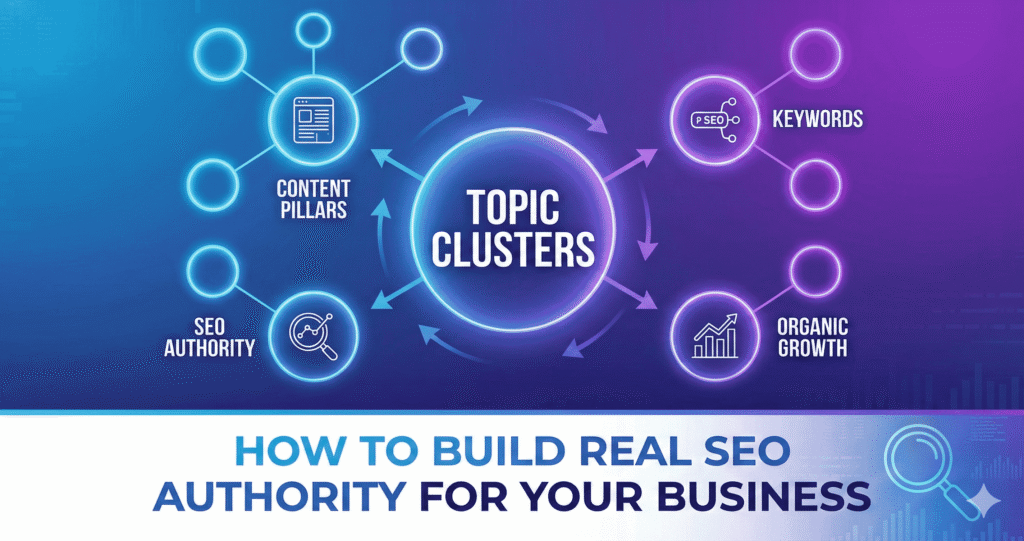
Topic clusters connect a broad pillar page to multiple cluster pages. The pillar covers the main theme, and cluster pages dive into subtopics. Internal links tie everything together.
Think of a bookstore. Pillar pages are “sections” like cookbooks. Cluster pages are the individual books, grouped by cuisine. Google reads these links like shelves, understanding your depth.
- Robots.txt = which crawlers can’t touch.
- Sitemaps = list everything.
- Topic clusters = “Here’s our expertise, trust us.”
This structured approach signals authority, relevance, and trustworthiness to both search engines and visitors.
Why Topic Clusters Work for SEO
Google now prioritises E-E-A-T: Experience, Expertise, Authoritativeness, Trustworthiness. Clusters check all the boxes.
- Traffic boost: Sites using clusters see 3x higher organic traffic after six months.
- Keyword coverage: Cluster pages target long-tail queries; pillars capture broad terms.
- Internal linking: Passes authority both ways, clusters strengthen pillars; pillars lift clusters.
Example: A Manchester plumber’s “plumbing services” pillar links to clusters like “emergency boiler repair Manchester.” The result? Dominates local packs, outranks competition.
Real Benefits Backed by Data
Clusters deliver measurable wins:
- Topical Authority: Comprehensive coverage signals expertise. HubSpot reports 4x more featured snippets after clustering.
- Wider Keyword Coverage: Targeting 50+ terms per cluster; SEMrush users rank for 62% more queries.
- User Engagement: Internal links cut bounce rates by 20%, sessions last 2x longer. Google rewards this.
- AI Visibility: LLMs like Gemini cite clustered sites 35% more.
E-commerce brands using clusters saw 28% YoY traffic growth in 2025, outpacing rivals.
Step-by-Step: Build Your First Cluster
Start small. Pick one core topic that your audience actively searches for.
1. Choose a Core Topic
Broad but focused. Consider past content wins, competitor gaps, and audience pain points.
Example: Restaurant owner targets “restaurant management costs.” Volume: 12K monthly searches. Relevant to operations.
Use the SEMrush Keyword Magic Tool. Look for informational/commercial intent, KD < 40, volume > 5K.
2. Research Keywords
Seed keyword: “restaurant costs”. Filter by intent, volume, and difficulty.
- Example pillar: “Curly hair routine” 90K searches, steady trends, low KD. Works as a cluster model.
- Use SEMrush Keyword Strategy Builder to generate pillar and cluster ideas in minutes. Saves hours of spreadsheets.
Prioritise: high-volume pillars, long-tail clusters. Example cluster: “best curl cream for humidity.”
3. Map Pillar and Cluster Pages
Pillar: “Complete Guide to Restaurant Costs” (broad overview).
Clusters:
- “Restaurant Labour Costs Breakdown 2025”
- “ Restaurant Bookkeeping Essentials”
- “Cutting Food Waste Costs”
Link pillar > clusters (under headings like 1. Master Labour Costs) and clusters > pillar.
4. Create Quality Content
Publish the pillar first. Use SEO Writing Assistant for readability, SEO, and originality.
- Primary keyword in title, H1, intro.
- Secondary terms are naturally used throughout.
- Example: Standalone “boiler repair” post ranks #45. After clustering: jumps to #8, +15% traffic.
Write for humans, not bots. Headings, lists, examples, and stats like ONS energy costs make content relatable.
5. Monitor and Expand
Track in SEMrush Position Tracking. Tag keywords by cluster. Watch rankings, ChatGPT citations.
- Add 2–3 new clusters quarterly.
- Audit low performers, refresh content.
- Google Analytics: aim for 3+ pageviews/session per cluster visitor.
Topic Cluster Examples That Win
Healthline Allergies Cluster:
Pillar “Everything About Allergies” > links to symptoms, treatments, and food allergies. Dominates 200+ keywords.
Puppy Care:
Pillar “Puppy Care 101” > crate training, supplies. Builds trust, converts browsers.
Video Marketing:
Guide links to funnels, promotions. Videos boost dwell time 40%.
Parallel:
London florist clusters “sustainable wedding flowers” > “eco bouquet care,” “local supplier guide.” Local SEO + eco audience engagement.
What You Should Do
- Audit content: Group 5–10 posts into a cluster. Add links.
- Free tools: Google Keyword Planner for seeds, Screaming Frog for orphan pages.
- Service clusters: “SEO Manchester” pillar > “technical audit,” “content strategy” clusters.
- Test one cluster monthly: Measure traffic lift in 90 days.
Common mistake: overly broad pillars. Fix: 2K–4K words, max 10–15 clusters.
Best Practices from Top Performers
- Link strategically: Anchor text = keywords, no “click here.”
- Update quarterly: Refresh stats, add FAQs. Google favours fresh authority.
- Mobile-first: 60% searches are mobile. Test clusters there.
- E-E-A-T proof: Cite ONS, Google, and add author bios.
- Avoid: Keyword stuffing, thin clusters. Google penalises fluff.
- Diversify beyond Google: Clusters boost LLM visibility, vital as SGE rolls out UK-wide.
Explore our SEO Services for cluster audits tailored to your industry’s competition. We map gaps, build actionable plans that rank.
Conclusion
Topic clusters deliver authority where vague keyword hunts fail. Websites ignoring them fall behind a significant traffic gap, proving it.
Focus should be on:
- Picking one topic
- Research
- Link
- Track
- Results compound
Cloudex Marketing provides transparent cluster strategies, no report spam. We structure your site so searches turn into customers.
Ready for clusters that actually work? Contact Cloudex Marketing and get a free topic map according to the industry your business is competing in.